AI Term of the Moment
ImageNet
Definition: interframe coding
In video compression, interframe coding encodes the differences between frames rather than compressing each full frame. It provides substantial compression for motion sequences because only a small percentage of the pixels are actually different from one frame to another. However, it depends entirely on the content. People walking will compress more than people running.
Not So Great for Editing
Although compression ratios can be very high with interframe recording, changing the content after it is compressed may yield poor results. For example, in professional broadcasting, the video is often edited substantially, and for better results, videographers generally choose intraframe coding (inTRA) rather than interframe (inTER). See intraframe coding.
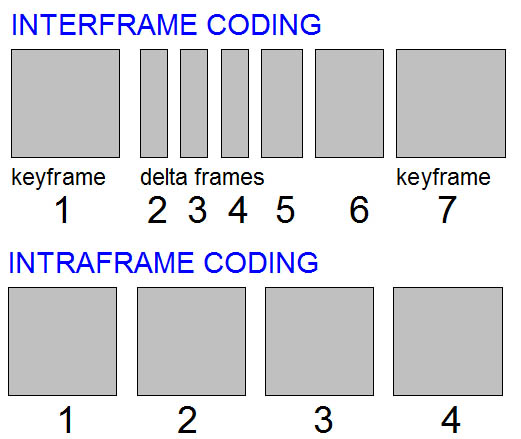
In-TER vs. In-TRA
Not So Great for Editing
Although compression ratios can be very high with interframe recording, changing the content after it is compressed may yield poor results. For example, in professional broadcasting, the video is often edited substantially, and for better results, videographers generally choose intraframe coding (inTRA) rather than interframe (inTER). See intraframe coding.
Containing the entire image, a new keyframe is generated based on a fixed number of frames or when a certain percentage of pixels has changed. Delta frames contain only incremental differences. Interframe coding is also called "temporal compression" and "long group of pictures compression" (long GOP compression).