AI Term of the Moment
high touch
Definition: Vera Rubin
NVIDIA's flagship AI hardware as of 2026, superseding Blackwell. The name comes from American astronomer Vera Florence Cooper Rubin, who pioneered work on the rotation rates of galaxies. Vera is the CPU and Rubin is the GPU.
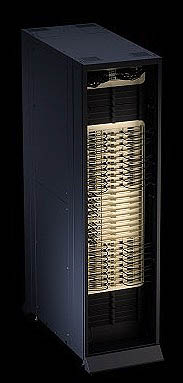
A Vera Rubin Rack
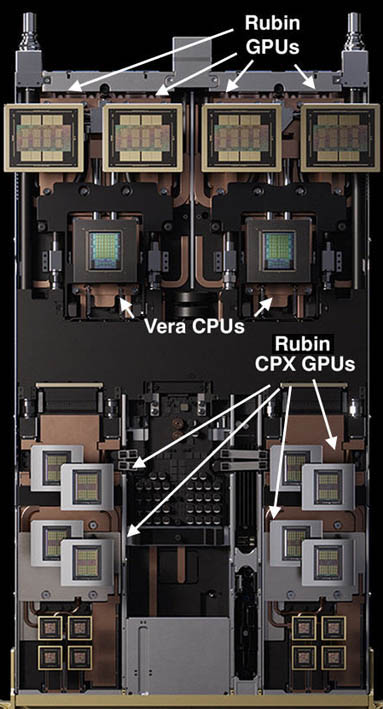
Different GPUs for Disaggregated Inference
Selling for roughly $8 million, a small data center may have 10 to 100 NVL72 racks while a major AI factory may have thousands. At $8 million per rack, the total price tag can add up. (Image courtesy of NVIDIA Corporation.)
To increase performance, "disaggregated inference" executes in two stages. To analyze the question, the "context" stage (prefill stage) requires a huge amount of computation (Rubin CPX GPUs). The "decode" stage (token generation) requires fast data transfer and high-speed memory (Rubin GPUs). See inference. (Image courtesy of NVIDIA.)